Community Vaccine Education in Practice: Ann Chahroudi, MD, PhD, at the Atlanta Science Festival
Explore how interactive science communication can build community engagement, trust, and understanding
At the 2026 Atlanta Science Festival, SPR Strategy and Operations Officer, Ann Chahroudi, MD, PhD, joined volunteers from the Emory Immunology Graduate Group (IgG), the Emory Vaccine Center, and the Emory National Primate Research Center to engage children and families in conversations about vaccines. Their booth, “How do vaccines protect us?” made vaccine science approachable, memorable, and safe to ask about.
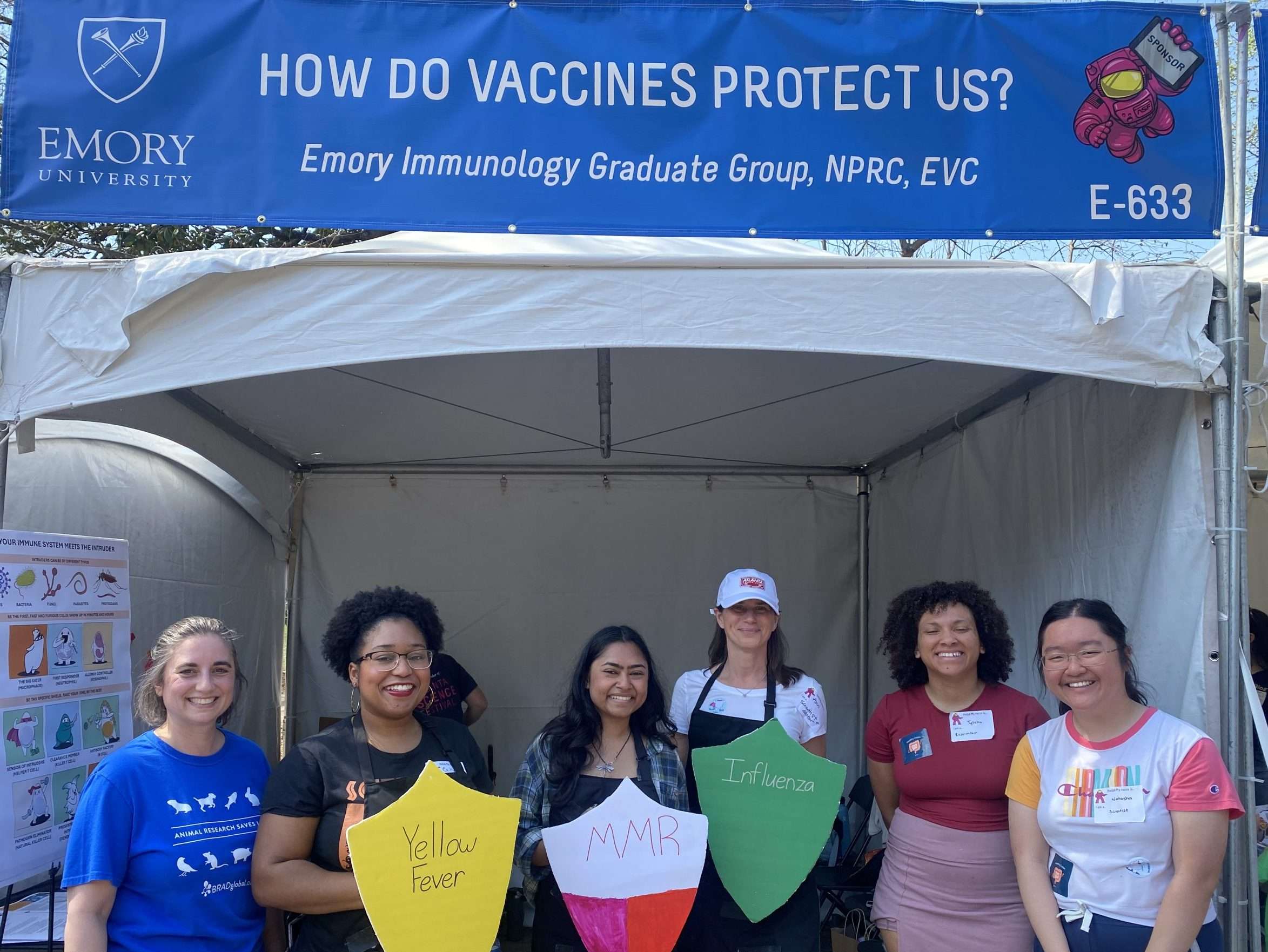
“There isn’t a more important time to talk about vaccines with the public,” Dr. Chahroudi emphasized. “I do this with patients and families in clinic of course but there is something different about engaging with strangers in a neutral environment. Those brief conversations can be very impactful.”
Teaching Vaccine Science Through Hands-On Learning
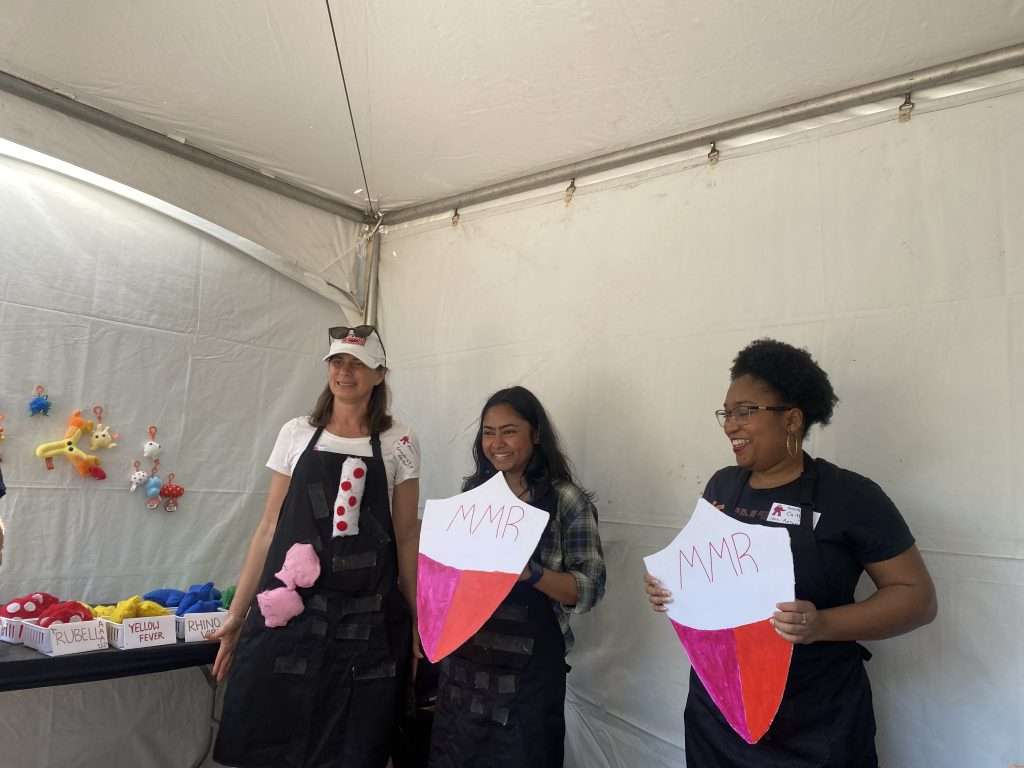
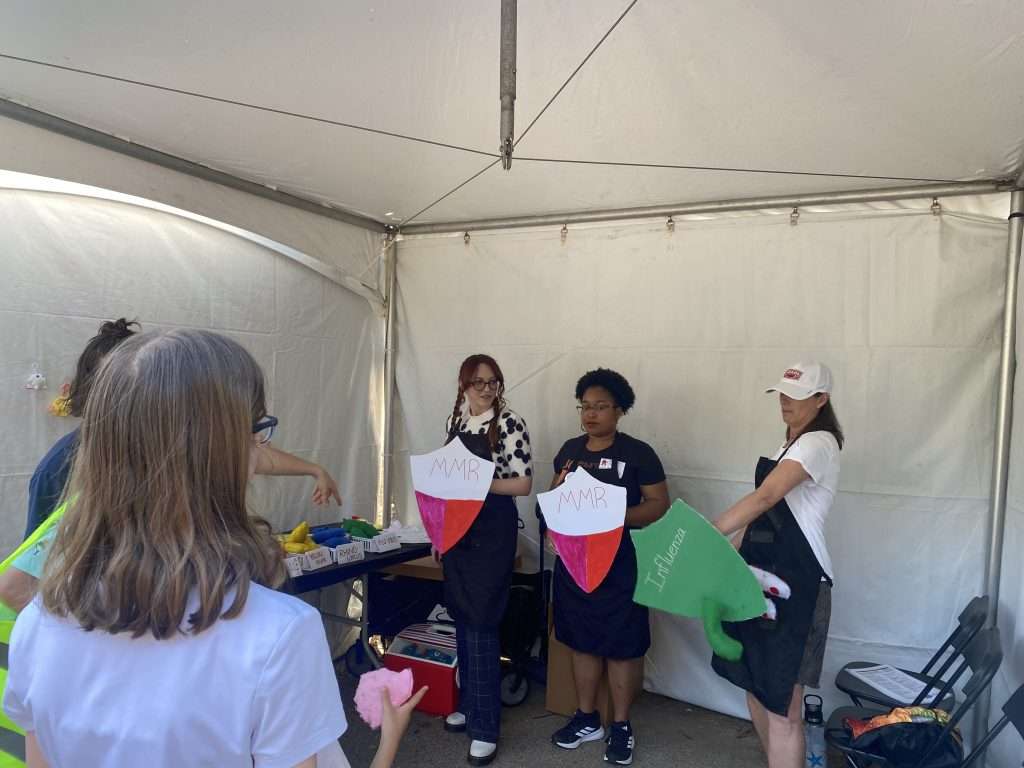
The booth’s centerpiece used an interactive game to illustrate exposure and protection. Volunteers wore aprons covered in Velcro, and children tossed plush “viruses” that adhered to the apron. Each time a plush virus stuck, it became a teachable moment, showing what exposure can look like and how protection is built.
Volunteers “vaccinated” one another and earned cardboard shields to represent immunity. With shields in hand, they could deflect the next wave of plush viruses, reinforcing the concept that vaccines prepare the immune system before the real threat arrives. They also explored scenarios that demonstrated boosters, pathogen-specific vaccines, and why different diseases require different vaccines.
Dr. Chahroudi credits much of the booth’s energy to the immunology graduate students who led the activity, “They were super enthusiastic and engaging with people from all walks of life. The activity allowed us to teach children through play while simultaneously educating their caregivers.”
Bringing Science into Your Community
Dr. Chahroudi’s day at the Atlanta Science Festival is a reminder that advocacy doesn’t always happen at a podium or in the clinic. In community spaces where people feel safe to be curious, a few minutes of conversation can strengthen trust, correct misinformation, and help families make confident health decisions.
For members interested in similar outreach, Dr. Chahroudi recommends reading, “Don’t Be Such a Scientist” by Randy Olson, which offers a quick, practical framework for translating science into compelling stories for the public and for funders. The takeaway, she says, is not to dilute the science, but to deliver it in a way people can carry with them.
Practical tips:
- Meet your community where they are: Science festivals, school nights, library events, and community centers are neutral spaces for honest questions.
- Be interactive: Hands-on demonstrations make complex ideas stick, especially for kids and caregivers learning together.
- Invite the next step: Offer a resource or simply encouragement to talk with a trusted healthcare professional.
###
About the Society for Pediatric Research
The Society for Pediatric Research® (SPR) encourages and supports pediatric research endeavors by cultivating a diverse network of child health researchers through collaboration, community, mentorship, and advocacy. Collaboration among SPR members creates meaningful progress for the future of children’s health. For more information, please visit www.societyforpediatricresearch.org, and follow us on LinkedIn, Bluesky, and X.