PROSPER Award
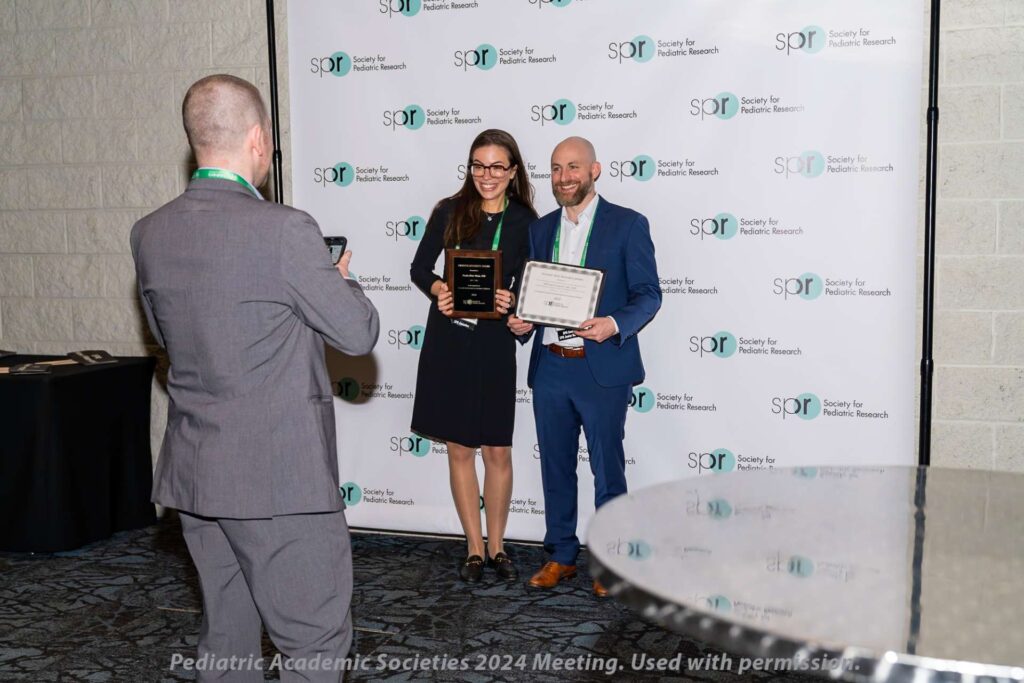
The PRomotion of FellOwS‘ PEdiatric Research (PROSPER) Award supports fellows from underrepresented in medicine (URiM) backgrounds who are pursuing child health research. Aligned with the Society’s mission to cultivate a diverse network of child health researchers through collaboration, community, mentorship, and advocacy, this competitive award provides material support and mentorship for a one-year research project that strengthens an academic, research-focused career trajectory.
This award provides $5,000 in funding, matched by the recipient’s organization. Funds may come from mentor, chair, and/or other sources. The source of matching funds must be defined in the letter of support from Division Head or Department Chair.
Submission Timeline: August 15 – September 30
Award
Eligibility Criteria
Application Requirements
Applicant’s Personal Information
Short Bio
Blinded and Unblinded Descriptions of:
Blinded and Unblinded Applicant’s NIH Biosketch
List of Past and Current Mentors
List of Mentors who you think would be appropriate mentors (at any institution):
Letter of Support from Division Head or Department Chair addressing how external mentoring provided by this program would be beneficial.
Selection Criteria
Current Recipients
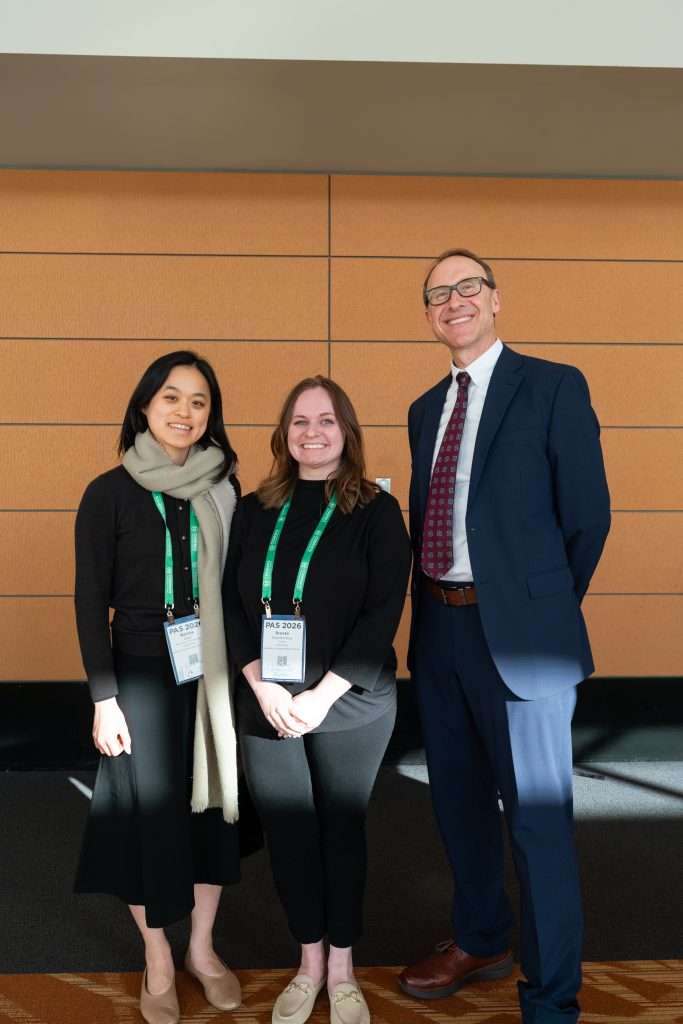
Brooke Quertermous, MD received her Bachelor of Science in Biochemistry and Bachelor of Arts in Spanish from Freed-Hardeman University (2017) and her Doctor of Medicine from the Medical College of Georgia at Augusta University (2022). She then completed her pediatrics residency at Vanderbilt University Medical Center (2025) where she has remained, currently as a first-year fellow in Pediatric Hospital Medicine. Her overarching career objective is to establish an independent clinical and translational research program centered on short- and long-term outcomes of severe viral acute respiratory infections (ARIs) in children, including biomarker development, host-pathogen interactions, and the development of chronic pulmonary sequelae. To date, she has published 5 first author manuscripts, including 3 original science contributions (2 of which are directly related to the topic of this proposal).

Brooke Quertermous, MD
Vanderbilt University Medical Center
Dr. Melissa Zhou is a third-year Pediatric Nephrology fellow and second-year student in the Master’s of Epidemiology and Clinical Research program at Stanford. She graduated from the University of Pennsylvania with dual majors in Biochemistry and Biology, then earned her medical degree from the Yale School of Medicine, where she also completed an additional year of research. She went on to complete her general pediatrics residency at the Children’s Hospital of Philadelphia.
Melissa’s enduring interest in the brain’s remarkable capacity for recovery after injury began as an undergraduate, when she investigated the molecular mechanisms of amyotrophic lateral sclerosis and frontotemporal lobar degeneration. During medical school, she further explored subclinical neuroimaging findings in pediatric multiple sclerosis and studied therapies aimed at improving social cognition and reducing restrictive and repetitive behaviors in autism spectrum disorder. A late medical school elective ultimately inspired her to focus her clinical and research interests on pediatric nephrology.
Melissa aspires to become a pediatric nephrologist and physician-scientist, with a focus on understanding the intersection of neonatal kidney disease and neurodevelopment. Neonatal acute kidney injury (AKI) is common and associated with significant morbidity and mortality, yet its impact on the developing brain remains poorly understood. With the support of a multidisciplinary team, Melissa is evaluating signatures of brain injury, perfusion, and altered development associated with neonatal AKI in preterm infants using near-infrared spectroscopy and advanced magnetic resonance imaging techniques. Initial results from her study have demonstrated significant differences in cerebral autoregulation in those preterm infants with and without acute kidney injury by gestational age in the first week of life, suggesting greater vulnerability to brain injury in those more premature during AKI. Melissa hopes to use this research to identify opportunities to design targeted interventions to improve the neurodevelopmental and functional outcomes for high-risk infants.

Melissa Zhou, MD
Stanford University School of Medicine