Interrogation of Disrupted Vascular Development Signals in Early Preterm Birth
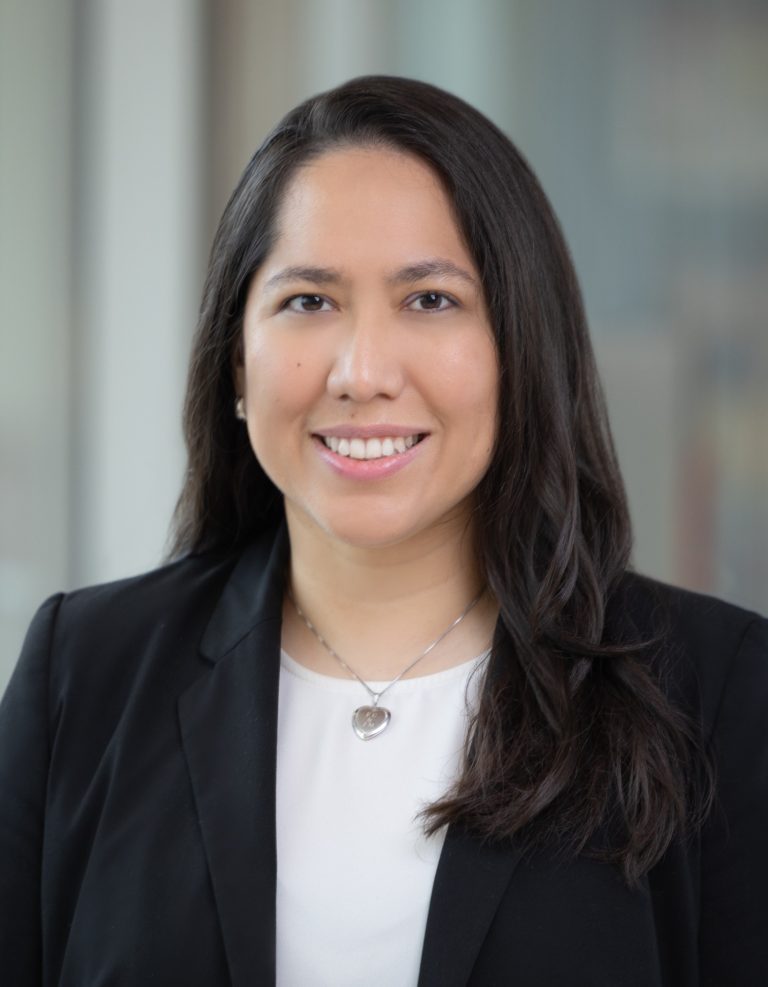
Faizah Bhatti’s, MD, research focuses on understanding how inflammation increases the risk of abnormal blood vessel development in preterm infants, and ultimately, to find ways to prevent complications related to vascular dysgenesis. Dr. Bhatti serves as an Associate Professor of Pediatrics, Ophthalmology, and Cell Biology at the University of Oklahoma Health Sciences Center and Oklahoma Children’s Hospital and is Director of the Developmental Vascular Biology Lab.
A central focus of this work is surfactant protein A (SP-A), an immunomodulatory protein that is well characterized in relation to pulmonary co-morbidities and is known to be deficient after birth in preterm infants. Dr. Bhatti’s team first discovered that SP-A is expressed in the retina and defined a pro-angiogenic neovascular phenotype in retinal disease in both animal models as well as in preterm infants. However, the molecular mechanisms driving this association are still not known.
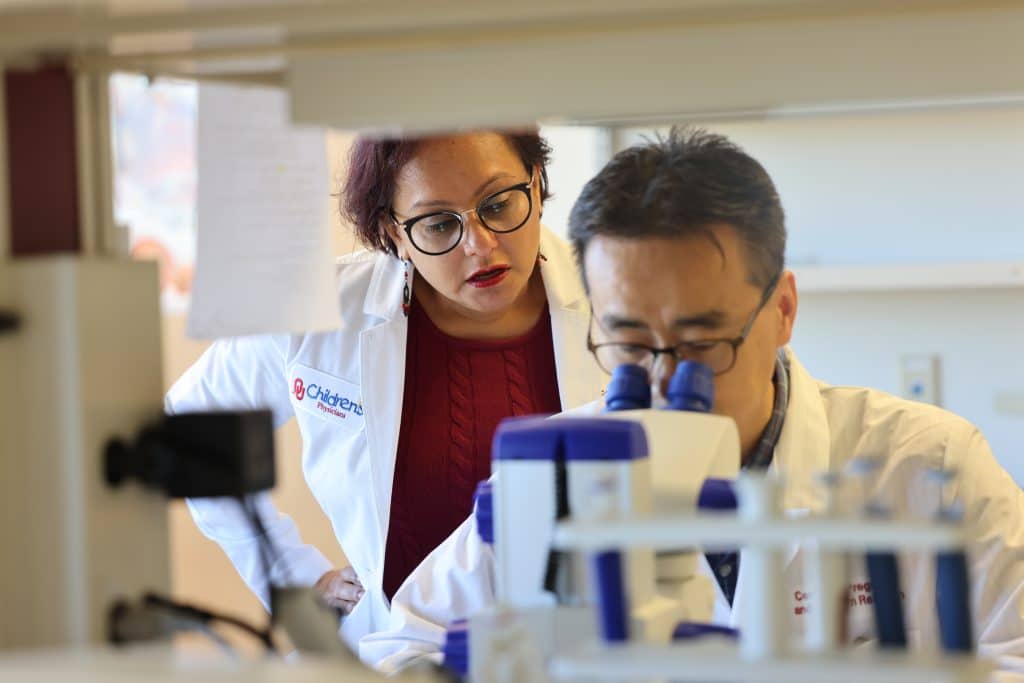
A Multi-pronged, Translational Approach
Dr. Bhatti’s research interrogates vascular and endothelial cell signaling pathways to better define underlying pathology and identify targets that can be harnessed for their therapeutic potential in retinal disease:
- Rodent models are used to study retinal vascular disease phenotypes and molecular targets which is supported by in vitro methods to investigate candidate cells, including retinal endothelial cells, perivascular cells, immune cells, and the extracellular matrix.
To define the complex interactions within the niche of this axis, her team focuses on the dynamic interplay between immunomodulatory pathways, redox perturbations, and other stressors in the developing neonate.
- Translational studies involve interrogation of clinical data and biological tissues with a focus on markers of systemic inflammation, sepsis and hemodynamic variables to identify the most informative dynamic variables driving abnormal blood vessel development in end organs and target tissues. This is critical in improving early detection of mal-perfusion and tissue hypoxia and will drive identification of associated risk factors.
- Dr. Bhatti’s team participates in a range of clinical trials focused on evaluating critical therapeutic approaches for infants, aimed at preventing and treating ROP and other vascular diseases.
DOI: 10.1167/iovs.13-13652. PubMed PMID: 25406276; PubMed Central PMCID: PMC4290564
DOI:10.1038/s41390-025-04435-w. PubMed PMID: 41102472; NIHMSID:NIHMS2118310